

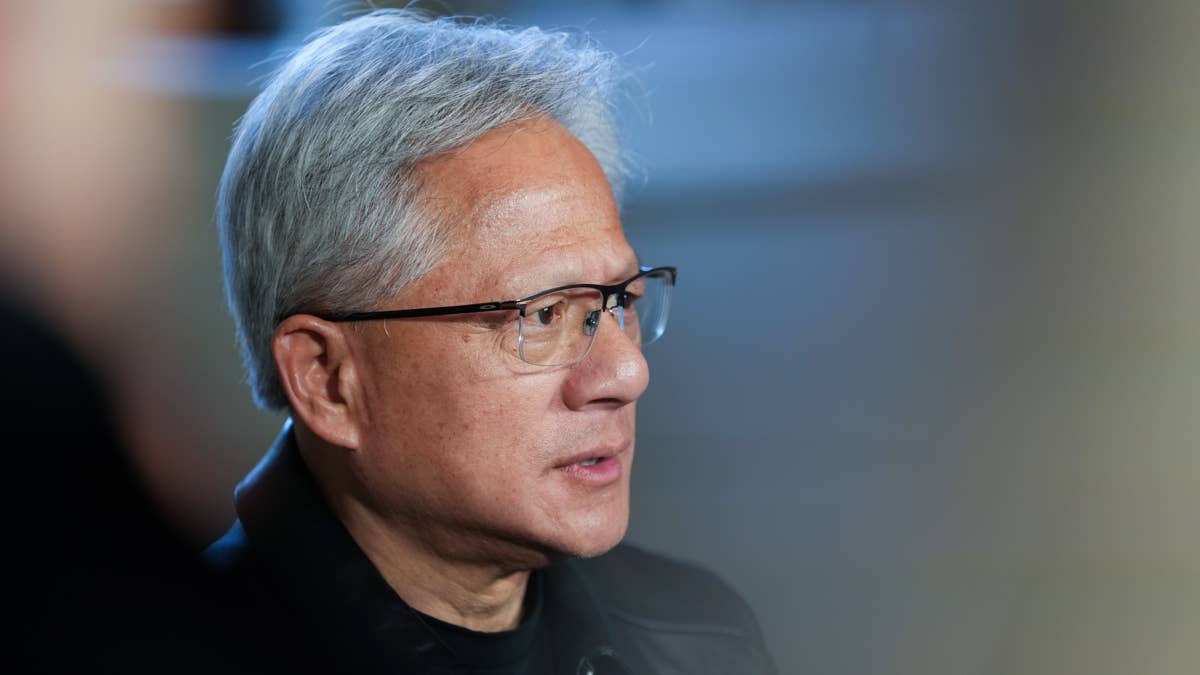
Jensen Huang spent the week selling Europe on artificial intelligence while Wall Street sold off the stocks built on it.
By the closing bell on October 16, the S&P 500’s technology sector had fallen more than 3%, the Nasdaq had lost about 2%, and energy was the stronger corner of the market with real momentum.
The damage had been building for days. AI and semiconductor stocks were on course to shed more than $1 trillion in combined value during the week as rate-hike fears, worries about AI financing and tougher competition weighed on sentiment, as reported by CNBC.
Also read: Michael Burry pulls an old playbook into the Nvidia fight
Jensen Huang’s calm meets an AI credit scare
Huang also moved to defuse a separate scare around CoreWeave, the debt-heavy cloud provider in which Nvidia holds roughly an 11% stake.
Speaking to reporters at an event in Stockholm, he said CoreWeave’s finances were improving and that he saw no need for Nvidia to backstop the company, according to TheStreet.
That worry runs deeper than one company.
Fed Chair Kevin Warsh has acknowledged that hyperscalers raising money in the bond market are intensifying competition for capital, partly explaining the climb in Treasury yields.
Morgan Stanley estimates AI-related global debt issuance will approach $570 billion in 2026, TheStreet reported.
Doubts about AI revenue added fuel.
Reports that OpenAI’s annualized revenue was nearing $50 billion, well below figures that had circulated earlier, helped knock Nvidia, Oracle and Micron lower on October 8.
Huang’s message has barely changed through all of it. When Nvidia reported results on August 26, he said AI had reached its inflection point, that compute had become revenue and that demand was accelerating.
 Huang’s message has barely changed through all of it.
Inflation and yields are doing the real damage
The trigger was a hot inflation report. Consumer prices rose 3.7% from a year earlier in September, with energy costs tied to the Iran conflict doing much of the lifting, and Bank of America was already calling for a Fed rate hike in October.
Both the headline and core readings came in above economists’ forecasts. The 10-year Treasury yield spiked immediately after the report was released on October 14 before calming later in the day.
That yield had already been pressing on growth stocks for weeks. On October 7, the benchmark 10-year note climbed to its highest level since 2002 as rising oil prices and a global bond selloff rattled investors.
Washington’s efforts to cap borrowing costs have had limited success. Treasury Secretary Scott Bessent has expanded bond buybacks, yet Sen. Elizabeth Warren called the program chaotic and questioned whether it was doing enough to bring yields down.
Why Nvidia held up better than its peers
Scale is a big part of the answer. Nvidia’s second-quarter revenue more than doubled from a year earlier to $96.2 billion, with its data center business supplying the vast majority of that total, according to Nvidia.
Investors are also separating companies that can fund the AI buildout from those that must borrow for it. The largest hyperscalers have shown little sensitivity to higher funding costs so far, while smaller firms are more exposed to elevated yields.
More Nvidia:
- Nvidia stock flashes massive signal as Wall Street leans in
- Nvidia’s AI boom revives a Warren Buffett warning for investors
- Nvidia puts $500 billion on the table, challenges banking as we know it
Wall Street remains firmly in Nvidia’s corner. Piper Sandler rated Nvidia overweight in September with a $300 target, calling it the outright leader in AI compute, according to investing.com.
That target actually sat below the average analyst forecast at the time, and buy ratings outnumbered sells by a wide margin. Piper’s math rests on future earnings, which is exactly what higher discount rates erode first.
November earnings will settle the debate
The hard test comes with Nvidia’s next report. The company has guided third-quarter revenue to about $108 billion, give or take 2%, and that outlook assumes no data center compute sales to China, as reported by Nvidia.
Before that, the Federal Reserve meets on October 27 and 28. San Francisco Fed President Mary Daly has said there is no urgency to move in October, even as Bank of America expects a hike at that meeting.
Huang’s comments may have eased the sense of immediate crisis, but Capital.com analyst Daniela Hathorn said Big Tech earnings still need to show that AI spending is translating into sufficient revenue and cash flow to justify the cost, TheStreet reported.
Until then, oil and yields will keep setting the tone.
Related: Nvidia, Palantir, and Alphabet send waves through Wall Street